

Invariance Through Latent Alignment
Authors
Takuma Yoneda, Ge Yang, Matthew R. Walter, Bradly Stadie
Abstract
A robot's deployment environment often involves perceptual changes that differ from what it has experienced during training. Standard practices such as data augmentation attempt to bridge this gap by augmenting source images in an effort to extend the support of the training distribution to better cover what the agent might experience at test time. In many cases, however, it is impossible to know test-time distribution-shift a priori, making these schemes infeasible. In this paper, we introduce a general approach, called Invariance Through Latent Alignment (ILA), that improves the test-time performance of a visuomotor control policy in deployment environments with unknown perceptual variations. ILA performs unsupervised adaptation at deployment-time by matching the distribution of latent features on the target domain to the agent's prior experience, without relying on paired data. Although simple, we show that this idea leads to surprising improvements on a variety of challenging adaptation scenarios, including changes in lighting conditions, the content in the scene, and camera poses. We present results on calibrated control benchmarks in simulation -- the distractor control suite -- and a physical robot under a sim-to-real setup.
Concepts
The Big Picture
You spend months training a robot arm to stack blocks in a carefully lit lab with a fixed camera angle. Then you move it to a different room. The lighting shifts. A window lets in afternoon sun. Someone left a coffee mug in the background. The camera got nudged. To you, the task is identical. To the robot, the world looks alien, and it fumbles.
This is the perceptual distribution shift problem, one of the most persistent headaches in robotics. A vision-based controller learns to associate what it sees with what actions to take, but what it sees in deployment often differs from what it saw during training.
The standard fix is data augmentation: flood training with randomly cropped, recolored, or otherwise modified images, hoping the robot learns to ignore irrelevant visual details. But you have to know in advance what changes to expect. If you didn’t anticipate the afternoon sun, no augmentation will save you.
A team from TTIC, MIT CSAIL, and IAIFI offers a different answer: don’t try to anticipate. Adapt on the fly. Their method, Invariance through Latent Alignment (ILA), lets a robot adjust its internal representations when deployed in unfamiliar visual conditions, with no labels, no rewards, and no paired data required.
Key Insight: Rather than memorizing all possible visual distractions during training, ILA matches the robot’s internal feature representations at deployment time to what they looked like during training, correcting for unknown perceptual shifts without retraining.
How It Works
When a trained neural network encounters images from a new visual domain (different lighting, a cluttered background, a shifted camera), its internal latent features shift. These compressed numerical summaries are what the network builds from each image, and when the pixel values change, the summaries change too. The policy misfires. ILA’s goal is to undo that shift in latent space, after training, without touching the policy itself.
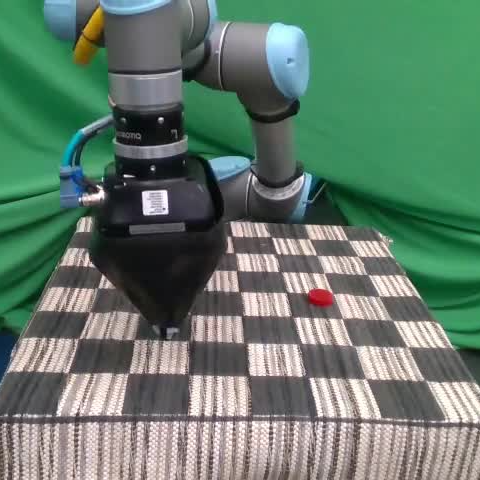
Here’s the process:
-
Train normally. A visuomotor policy (a neural network mapping camera images to motor commands) is trained on the source domain using standard reinforcement learning. An encoder sub-network compresses each raw image into a compact latent representation: a set of numbers summarizing what the robot currently sees.
-
Collect unlabeled target data. At deployment, the agent gathers observations from the new environment. No action labels, no reward signals, just raw images.
-
Align distributions, not pixels. Rather than translating target images to look like source images (expensive and brittle), ILA trains a lightweight module to match the statistical distribution of latent features from the target domain to those from the source. An adversarial objective drives this: a discriminator tries to tell source and target features apart while the alignment module tries to fool it. When neither can reliably win, the features are statistically equivalent.
-
Keep the policy frozen. Policy weights never change. Only the encoder’s feature-producing layer adapts, so the policy’s task knowledge stays intact. ILA just ensures the features fed to it look familiar.
The difference from pixel-level approaches like CycADA is where adaptation happens. Working in compact latent space is faster and, as the experiments confirm, more effective for control tasks.
Why It Matters
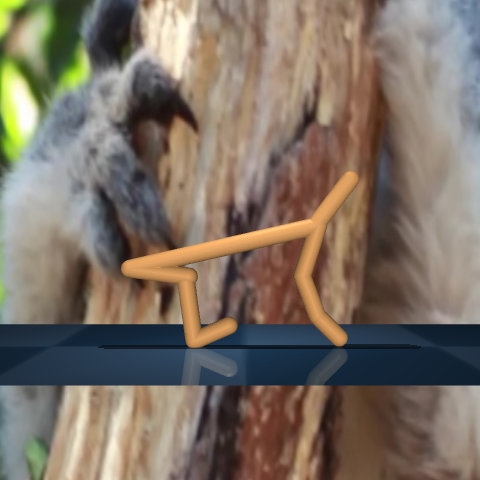
The team tested ILA on the Distractor Control Suite, a standard benchmark that injects challenging visual distractions into continuous control tasks: dynamic video backgrounds, randomized lighting, and altered camera poses. These aren’t subtle perturbations. Some configurations change almost everything in the scene except the robot itself.
ILA outperformed data augmentation baselines across the tested conditions. It succeeded where augmentation fails outright, particularly with camera pose shifts, because augmentation can’t fix a fundamentally different geometric relationship between pixels. The method also transferred to a physical robot in a sim-to-real setup.
Simple adversarial distribution matching in latent space turns out to be enough to handle diverse, unpredictable visual perturbations that no amount of training-time engineering could anticipate.
ILA points toward a different philosophy for deploying learned controllers. Rather than asking engineers to pre-enumerate every possible visual disturbance (an impossible task), it asks: can the robot quietly adapt its perception when the world looks different? This moves the robustness burden from training, where you can’t know the future, to deployment, where you can observe the present.
The same distribution shift problem shows up in autonomous vehicles, surgical robots, and drone navigation. Any system relying on learned visual representations is vulnerable, and the latent alignment idea could in principle extend to these settings too.
What happens when the deployment environment isn’t just visually different but structurally different? Whether latent alignment can handle changes in the task itself, not just changes in how the same task looks, remains an open question.
Bottom Line: ILA lets robots adapt to unknown visual changes at deployment time by aligning internal representations, with no labels, no rewards, and no prior knowledge of what will change. It handles lighting, background, and camera shifts that standard training-time augmentation cannot cover.
IAIFI Research Highlights

This work combines reinforcement learning with unsupervised domain adaptation, taking distribution-matching techniques from machine learning theory and applying them to the practical problem of deploying physical robots in uncontrolled environments.

ILA shows that test-time adaptation in latent space can outperform training-time augmentation for visuomotor control. Perception systems may not need prior knowledge of deployment conditions to generalize; they just need a way to recalibrate on arrival.

Giving robots the ability to adapt to unknown perceptual shifts without supervision is a step toward embodied AI that works outside controlled settings, relevant to any intelligent system operating where conditions can't be perfectly predicted.
Open questions remain about how latent alignment scales to more complex structural distribution shifts and multi-task settings. The paper is available at [arXiv:2112.08526](https://arxiv.org/abs/2112.08526), with code and videos at the project website.
Original Paper Details
Invariance Through Latent Alignment
2112.08526
Takuma Yoneda, Ge Yang, Matthew R. Walter, Bradly Stadie
A robot's deployment environment often involves perceptual changes that differ from what it has experienced during training. Standard practices such as data augmentation attempt to bridge this gap by augmenting source images in an effort to extend the support of the training distribution to better cover what the agent might experience at test time. In many cases, however, it is impossible to know test-time distribution-shift a priori, making these schemes infeasible. In this paper, we introduce a general approach, called Invariance Through Latent Alignment (ILA), that improves the test-time performance of a visuomotor control policy in deployment environments with unknown perceptual variations. ILA performs unsupervised adaptation at deployment-time by matching the distribution of latent features on the target domain to the agent's prior experience, without relying on paired data. Although simple, we show that this idea leads to surprising improvements on a variety of challenging adaptation scenarios, including changes in lighting conditions, the content in the scene, and camera poses. We present results on calibrated control benchmarks in simulation -- the distractor control suite -- and a physical robot under a sim-to-real setup.